
Did you know that the average person waits almost 2 hours before getting medical help during a home emergency? That’s actually kinda crazy when you think about it.
Most people either don’t have the right supplies at home, or they spend forever trying to figure out if they should go to the doctor or not.
A medical urgent care kit changes that whole situation. When you have the right supplies ready to go, you can treat minor problems yourself and feel confident about handling bigger issues until help arrives.
And the best part is, whenever you’re dealing with sudden illness, unexpected injuries, or just everyday health stuff, having a medical urgent care kit in both your house and car just makes life way easier.
The Reality of Medical Emergencies
Heres the truth – most medical emergencies happen at home or while traveling. Studies show that like 70% of accidents occur in familiar places, not at work or school. Your kid could fall off their bike in the driveway, someone might cut themselves while cooking dinner, or a family member could have a bad reaction to something they ate.
Having a urgent care kit ready means you can act fast instead of panicking. Those first few minutes after an injury or illness really matter. Quick treatment can prevent infections, reduce pain, and sometimes even save lives in serious situations.
Think about being stuck in traffic when your kid gets a nosebleed, or being on a road trip when someone gets a migraine. Without a medical urgent care kit in your vehicle, your basically helpless until you find a store or get home.
What Makes a Medical Urgent Care Kit Different?
You might be wondering what’s the difference between a regular first aid kit and a urgent care emergency kit. Good question! A basic first aid kit usually just has bandaids and maybe some antiseptic. But a urgent care emergency kit is way more comprehensive.
A proper urgent care kit includes medicines for different situations, tools for treating injuries, and supplies for handling various medical problems. Its like having a mini pharmacy and doctors office in a box. You want something thats ready for everything from minor cuts to more serious issues that need immediate attention.
The goal of a urgent care medical kit is to bridge the gap between when something happens and when you can get professional medical help. It buys you time and can make someone way more comfortable while you figure out the next steps.
Essential Items for Your Urgent Care Home Kit
Your urgent care home kit should be pretty well-stocked since youve got more space at home than in a car. Start with wound care supplies – different sizes of bandages, sterile gauze pads, medical tape, and antiseptic wipes. These handle cuts, scrapes, and minor bleeding.
Add tools like scissors, tweezers for splinters, a digital thermometer, and disposable gloves. A good urgent care medicine kit needs pain relievers like ibuprofen and acetaminophen for headaches, fever, and body aches. Keep both because some people cant take certain types.
Antihistamines are super important for allergic reactions and bug bites. Hydrocortisone cream helps with itchy rashes and skin irritation. Antacids work for stomach problems and heartburn. Cold and flu medicines including cough syrup and decongestants come in handy during sick season.
Dont forget antibiotic ointment for preventing infections in cuts. Instant cold packs are great for bumps, sprains, and reducing swelling. An ace bandage helps with twisted ankles or wrist injuries. Some people also keep burn gel, eye drops, and anti-diarrhea medicine.
The Debate About Urgent Care Kit With Antibiotics
A lot of people ask about having a urgent care kit with antibiotics at home. This is controversial because antibiotics are prescription-only in most places. You cant just walk into a store and buy them.
Some families who live in remote areas or do serious outdoor activities work with their doctors to get a urgent care kit with antibiotics for true emergencies. If your hours away from any hospital or clinic, having antibiotics could be really important for things like bad infections or animal bites.
However, for most regular families, you probably wont need actual antibiotic pills in your urgent care medical kit. Focus on getting quality topical antibiotic ointments instead – those work great for preventing infections in cuts and scrapes, and you dont need a prescription.
If you think your family situation needs oral antibiotics available, talk to your doctor honestly about it. They might prescribe some for specific scenarios, but dont try to stockpile antibiotics on your own because using them wrong can cause problems.
Why Your Car Needs a Medical Urgent Care Kit Too
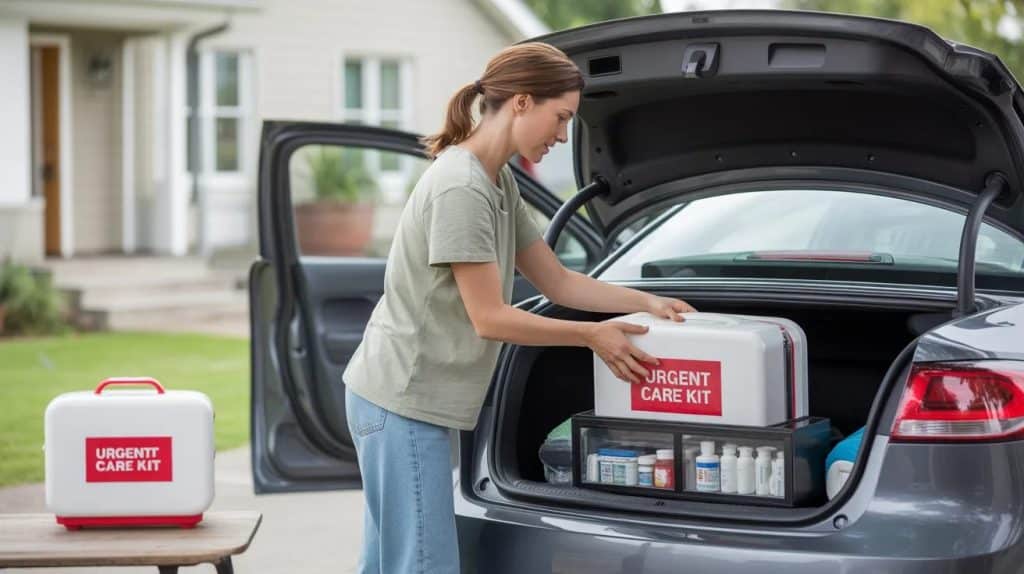
Keeping a medical urgent care kit in your vehicle is just as important as having one at home. Think about all the time you spend driving – going to work, taking kids to activities, running errands, road trips. Accidents can happen anywhere.
Car accidents are obvious situations where youd need supplies, but even small stuff comes up all the time. Someone gets carsick, a kid gets a headache, you scrape your hand while loading groceries. Having supplies right there in your car means you can deal with it immediately.
Your vehicle urgent care kit doesnt need to be as big as your home one, but it should cover basics. Include bandaids, gauze, antiseptic wipes, pain relievers, antihistamines, and any personal medications family members need regularly.
Make sure your car kit can handle temperature changes. Some medicines dont do well in extreme heat or cold, so check labels. A small cooler bag might help in really hot climates.
Building Your Urgent Care Kit on a Budget
You dont need to spend hundreds of dollars on a urgent care home kit. Start small and build it over time. Buy generic brands because they work just as good as name brands but cost way less.
Watch for sales at drugstores – they often have deals on first aid supplies and medicines. Dollar stores actually have decent basic supplies like bandaids, gloves, and antiseptic. Just check expiration dates before buying.
Make a list of essentials and grab a few items each shopping trip. In a couple months youll have a solid urgent care medicine kit without breaking the bank. Prioritize the stuff you know your family uses most.
Some people buy a pre-made kit as a starter and then add to it. Thats fine, but check whats actually inside before buying. A lot of pre-made kits are overpriced and dont have everything you really need.
Teaching Family Members How to Use It
Having a medical urgent care kit is pointless if nobody knows how to use it. Take time to show older kids and family members where the kit is and whats inside.
Explain what different supplies are for and when to use them. Practice basic stuff like cleaning and bandaging a cut, taking temperature, or using an ice pack properly. This knowledge is super valuable.
Keep simple instructions inside the kit for things people might forget under pressure. Write down dosages for medicines, especially for kids at different ages. Include emergency phone numbers like poison control.
Consider taking a basic first aid class as a family. Lots of community centers and hospitals offer them cheap or even free. Knowing CPR and basic emergency response is way more important than just having supplies.
When to Use Your Kit vs Getting Professional Help
A medical urgent care kit handles lots of situations, but you gotta know when something needs a doctor or hospital. Your kit is great for minor cuts, scrapes, headaches, small burns, bug bites, and other non-serious stuff.
But if someones bleeding a lot and it wont stop, having trouble breathing, showing signs of a serious allergic reaction, or dealing with a possible broken bone. You have to get professional help and call 911 or go to the emergency room.
Your kit can help keep someone stable while waiting for help to arrive. You can stop bleeding with gauze and pressure, give antihistamines for a reaction while heading to the hospital, or immobilize an injury until paramedics show up.
Trust your gut. If something feels serious or your worried, its better to seek medical care. The kit is there to help with everyday injuries and illnesses, not replace doctors.
Final Thoughts
Putting together a medical urgent care kit for your home and vehicle is one of those things that seems like extra work until you actually need it. Then your super grateful you took the time to be prepared.
It doesnt have to be complicated or expensive. Start with basics and build from there. The peace of mind knowing you can handle common medical situations is totally worth it.
Take an hour this weekend to either put together your kits or check the ones you already have. Make sure everythings stocked, nothing’s expired, and everyone knows where to find them. That small investment of time could make a huge difference when it really matters.
Frequently Asked Questions
Q1: How is a medical urgent care kit different from a regular first aid kit?
A regular first aid kit usually just has basic stuff like bandaids and maybe some antiseptic. A medical urgent care kit is way more complete – it includes medicines for pain, fever, allergies, and stomach issues, plus tools and supplies for handling different types of emergencies. Think of it like a first aid kit on steroids. The urgent care kit is designed to handle more situations and keep you covered until you can get professional medical help if needed.
Q2: What size urgent care kit do I need for my car?
Your vehicle urgent care medical kit doesnt need to be huge, but it should cover the basics. A kit about the size of a shoebox works good for most families. Focus on essentials like bandages, pain relievers, antihistamines, antiseptic, and any personal medications family members need regularly. You want it big enough to be useful but small enough that it doesnt take up tons of trunk space. If you do lots of road trips or have a big family, go slightly larger.
Q3: Can I legally have antibiotics in my urgent care kit without a prescription?
In most places, no – you need a prescription to get oral antibiotics. However, over-the-counter antibiotic ointments and creams are totally legal and work great for cuts and scrapes. If you think your situation requires having prescription antibiotics available (like if you live somewhere super remote or travel to areas without medical care), talk to your doctor. They might prescribe some for specific emergency scenarios. Just dont try to buy or stockpile prescription antibiotics on your own because thats illegal and unsafe.
Q4: How often should I check and update my urgent care home kit?
Check your kits at least twice a year – maybe set a reminder on your phone for every 6 months. Look for expired medicines, used-up supplies, and anything that needs replacing. After you use something from the kit, restock it right away so your always ready. Seasons are a good time to check too – before summer when kids are outside more, or before winter when cold and flu season hits. Keeping your urgent care medicine kit fresh and fully stocked is super important.
Q5: What’s the most important thing to include in an urgent care kit?
Honestly, pain relievers like ibuprofen and acetaminophen are probably the most-used items in any urgent care kit. Almost everyone deals with headaches, body aches, or fevers at some point. After that, good wound care supplies – bandages, gauze, antiseptic, and antibiotic ointment – handle the most common accidents like cuts and scrapes. But really, the most important thing is having SOMETHING prepared. Even a small basic kit is way better than nothing when an emergency happens.