
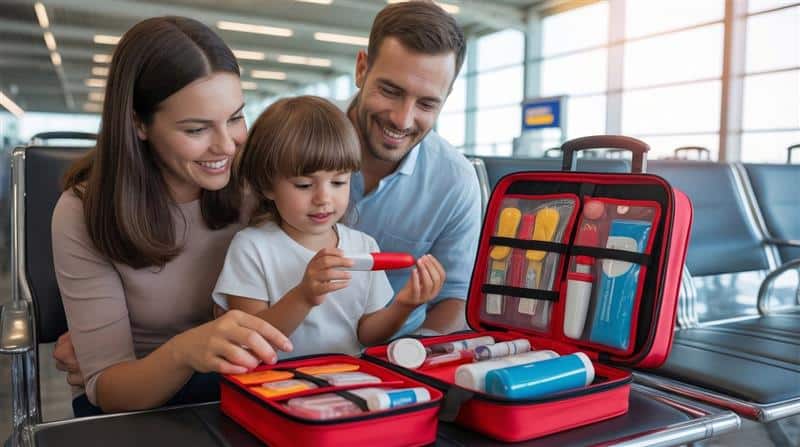
Have you ever been stuck somewhere with a sick kid and realized you brought everything except what you actually needed? Most parents pack snacks, extra clothes, tablets for entertainment, but when it comes to medical supplies we just grab whatever looks important and hope for the best.
The numbers tell a different story though. Research from Johns Hopkins shows that roughly 1 in 8 children need some form of medical attention while traveling with family. That’s not counting the smaller stuff like motion sickness, cuts from playground equipment, or the mystery rash that shows up right before you’re supposed to get on a plane.
Kids healthcare kits are not just about being prepared. They’re about not having to search for a pharmacy in an unfamiliar city when your child is miserable. They’re about actually enjoying your trip instead of spending it worried.
Why Regular First Aid Kits Don’t Cut It
Walk into any store and you’ll find first aid kits. They look complete. They have lots of items. But pull one open and check what’s inside. Bandages for adults. Generic pain pills. Maybe some gauze. Nothing specific for children who need different dosages, different formats, and definitely different solutions than grown ups.
Most parents figure this out the hard way. You buy something that claims to have everything, then realize it has nothing your actual kid can use. That’s why putting together proper kids healthcare kits yourself makes more sense than trusting pre-made boxes designed by people who’ve never dealt with a cranky seven year old running a fever at a hotel.
The Cost of Being Unprepared
Financial impact from inadequate kids healthcare kits adds up quickly. Emergency room visits for minor conditions that could be treated with basic supplies cost families an average of $450-800 per incident after insurance. Urgent care visits run $100-200. Even pharmacy runs at vacation destinations charge premium prices – children’s ibuprofen that costs $6 at home costs $15 at resort gift shops.
Time costs matter more than money during precious vacation days. Finding pharmacies in unfamiliar locations, waiting at urgent care clinics, dealing with insurance issues away from home – these activities consume 4-6 hours minimum per incident. That’s half a vacation day lost to preventable medical chaos.
These costs disappear with properly prepared kids travel medicine kit supplies costing under $50 initially and requiring minimal maintenance.
Five Critical Mistakes Parents Make
Mistake 1: Packing Adult Medications and Guessing Pediatric Doses
This dangerous practice sends kids to emergency rooms regularly. Adult acetaminophen tablets are not interchangeable with children’s formulations. Dosing by age rather than weight causes under or overdosing. A child’s medical emergency kit requires age-appropriate formulations with clear dosing instructions by weight, not improvised adult medications.
Mistake 2: Forgetting Temperature Extremes Affect Medications
Leaving kids healthcare kits in hot cars or checked airplane luggage exposes medications to temperatures that degrade effectiveness. Liquid medications separate, tablets crumble, and active ingredients break down at temperatures above 85°F. Yet 40% of parents store travel medical kits in vehicles or garages between trips. Medications need climate-controlled storage and should travel in carry-on luggage during flights.
Mistake 3: Ignoring Expiration Dates Until Crisis Hits
Opening your emergency medicine kit for kids during a crisis only to find everything expired creates preventable disasters. Medications lose potency after expiration dates – sometimes becoming completely ineffective or occasionally developing harmful breakdown products. Setting calendar reminders to check kits every six months prevents this common failure.
Mistake 4: Bringing Everything or Nothing
Some parents pack their entire medicine cabinet “just in case,” creating bulky unmanageable kids healthcare kits where nothing can be found quickly. Others bring bare minimum or nothing, assuming they’ll figure it out. Neither extreme works well. Strategic packing based on destination type, trip duration, and children’s specific medical history creates functional kits.
Mistake 5: Keeping Medical Supplies Separated from Kids
Parents store kits in checked luggage or leave them at accommodations while exploring all day. When the child gets hurt at the beach or park, relevant supplies are miles away. A small daily urgent care kids healthcare kits carried in diaper bags or backpacks provides immediate access to frequently needed items while comprehensive supplies stay at base.
What Actually Belongs in Kids Healthcare Kits
Essential Medications – Children’s acetaminophen and ibuprofen in appropriate formulations for your child’s age. Bring both pediatric kits because they work differently and can be alternated for high fevers. Include antihistamine for allergic reactions, anti-nausea medication for motion sickness or stomach bugs, and anti-diarrheal appropriate for your child’s age. These five medication categories address 85% of pediatric travel medical situations.
Wound Care Basics – Assorted bandages including fun designs that reduce drama with young kids. Antibiotic ointment prevents infection in cuts and scrapes. Sterile gauze pads and medical tape for larger wounds. Antiseptic wipes for cleaning injuries. Tweezers for splinters. These supplies handle minor injuries that happen constantly during active family vacations.
Diagnostic Tools – A reliable digital thermometer is non-negotiable. Fever assessment guides treatment decisions and determines whether professional care is needed. Trying to guess if a child has a fever wastes time and creates anxiety.
Comfort and Treatment Items – Electrolyte replacement for dehydration from illness or heat. Saline nasal spray for congestion. Aloe gel for sunburns. Hydrocortisone cream for rashes and bug bites. These items provide immediate relief while you assess whether situations require medical attention.
Documentation – Dosing charts for all kids healthcare kits medications organized by weight. Insurance information and policy numbers. Pediatrician contact details. List of known allergies and current medications. This paperwork enables appropriate treatment whether you’re self-treating or seeking professional care.
Customizing Kids Healthcare Kits for Destination and Duration
Weekend trips need less than two-week international travel. Beach vacations require different supplies than mountain camping. Smart customization prevents both overpacking and being caught unprepared.
Beach Destinations – Add waterproof bandages that actually stay on in water. Vinegar for jellyfish stings is common in certain areas. Extra sunscreen and aloe gel. Eye drops for saltwater irritation. Swimmer’s ear prevention drops if your child is prone to ear infections.
International Travel – Include anti-diarrheal medication as top priority since water and food differences cause stomach issues. Water purification tablets if traveling to areas with questionable water safety. Copies of prescriptions for all medications. Translation cards explaining allergies and medical conditions in destination language. Anti-malaria medication if traveling to endemic regions requires prescription from your pediatrician before departure.
Outdoor Adventures – Insect repellent in child-safe concentrations. Comprehensive bite treatment because outdoor exposure means multiple bites. Tick removal tool with instructions for proper removal. Poison ivy treatment. Moleskin for blister prevention and treatment during hiking.
Cold Weather – Lip balm for chapped lips from cold dry air. Moisturizing lotion for dry skin. Hand warmers. Winter activities increase injury risk, so more comprehensive first aid supplies make sense.
Adjusting your emergency medications for children based on actual destination prevents carrying unnecessary items while ensuring you have what specific environments require.
The Antibiotics Debate for Family Travel
Many parents ask whether including an antibiotics kit makes sense for kids healthcare kits, especially during international travel.
This question lacks simple answers. Antibiotics require prescriptions and pediatric dosing differs significantly from adult dosing. Self-treating children with antibiotics without medical guidance risks incorrect treatment and antibiotic resistance development.
However, some pediatricians prescribe “emergency” antibiotics for families traveling to genuinely remote locations far from medical care. If you’ll be days from any medical facility, having kids healthcare kits for common childhood bacterial infections might be reasonable after honest discussion with your pediatrician about specific travel plans.
Ear infections are common in children and often require antibiotics. Strep throat needs antibiotic treatment. Some urinary tract infections require antibiotics. If you’re traveling somewhere these conditions cannot be diagnosed and treated by medical professionals, emergency antibiotics might make sense.
Better approach for most travel: research medical facilities at destinations before leaving. Many countries have excellent healthcare systems. Getting proper diagnosis and treatment there beats self-treating with antibiotics from home.
For truly remote travel – multi-day wilderness trips or locations genuinely hours from medical care – discuss with your pediatrician whether they’ll prescribe emergency antibiotics. Obtain clear written instructions for which conditions warrant antibiotic use, which specific antibiotic for which condition, and proper weight-based dosing.
Organization Systems That Actually Work
Organization determines whether kids travel medicine kit supplies help or create frustration. Even perfect items don’t help if you can’t locate them quickly when needed.
Use clear zippered bags allowing you to see contents without opening. When your child needs something urgently, you shouldn’t dump everything searching. Clear organization enables instant location of needed items.
Separate frequently used items from rarely needed supplies. Pain relievers, bandages, and allergy medicine get used constantly so they should be immediately accessible. Items for uncommon situations can be stored deeper in the kids healthcare kits.
Label everything clearly with contents and dosing information. During stressful medical situations at midnight in unfamiliar locations, clear labels prevent dangerous mistakes.
Create a master checklist of all kids healthcare kits contents and verify it before each trip. This prevents discovering missing critical items after leaving home.
Consider a two-tier organization – comprehensive kit staying at accommodation and smaller daily kit traveling in your day bag. The daily urgent care kit contains immediate-need items while the main kit provides comprehensive supplies.
Essential Maintenance Tips for Kids Healthcare Kits
Kids healthcare kits require regular maintenance rather than a pack-once-and-forget approach.
- Check kits every three months minimum. Remove expired medications and replace them. Restock items used during previous trips. Update dosages as children grow – that infant medication worked last year but your child needs different formulations now.
- Store kits properly between trips in cool, dry locations. Heat and humidity degrade medications faster than proper storage conditions.
- After each trip, immediately replace anything used rather than waiting until packing for the next vacation when you’re rushed.
- Update contents based on changing needs as kids grow. Medical needs shift dramatically between toddler and school-age years.
Practical Implementation
Start building your kids healthcare kits this week rather than waiting until the next trip. Purchase core items now while you have time to research and compare options. Waiting until packing creates rushed decisions and forgotten items.
Involve older children in kit preparation. Teaching them about their own medical care while traveling builds responsibility and ensures they understand what to do in emergencies.
Test your organizational system during a local day trip before major travel. This identifies problems with your setup while you can still fix them easily.
Document what gets used during each trip. After several vacations, patterns emerge showing which items matter and which waste space. Adjust your pediatric kit accordingly.
The initial effort building comprehensive kids healthcare kits pays off immediately during the first travel medical situation you handle confidently rather than desperately searching for supplies.
Frequently Asked Questions
Q1: How much do properly stocked kids healthcare kits cost?
Initial setup runs $40-60 for generic medications, wound care supplies, and a thermometer. Maintenance costs $10-15 per trip replacing used items and updating expired medications. This investment prevents urgent care visits averaging $150-200 or emergency room visits costing $450-800 for minor treatable conditions.
Q2: What’s the difference between an emergency medicine kit for kids and regular first aid kits?
Emergency medicine kits for kids focus on medical treatment – medications for fever, pain, allergies, stomach issues plus diagnostic tools like thermometers. Regular first aid kits emphasize injury treatment – bandages, gauze, antiseptic. Comprehensive kids healthcare kits combine both medical treatment and injury care supplies addressing a full range of pediatric travel medical needs.
Q3: Do I need separate kits for each child?
Not necessarily separate complete kits, but age-appropriate medications for each child within one organized system. Use labeled sections or pouches for different ages – “Toddler Meds” versus “School Age Meds.” Some supplies like wound care work across ages. Medications require different formulations and dosing by age and weight.
Q4: Can I bring kids travel medicine kit supplies through airport security?
Yes. TSA allows medically necessary liquids exceeding 3.4 ounces in carry-on luggage after screening. Keep medications in original labeled containers. Declare them during screening. Prescription medications should always travel in carry-on, never checked luggage due to loss risk. Over-the-counter medications can go in either carry-on or checked bags.
Q5: Should I include emergency medications for children who have never had specific conditions?
Include medications for conditions your children typically experience based on medical history. All kids should have pain/fever reducers, basic wound care, antihistamine, and anti-nausea medication since these address common issues. Skip extensive treatment supplies for conditions they’ve never had unless traveling to high-risk areas. Consult your pediatrician about what makes sense for your specific children’s needs.