
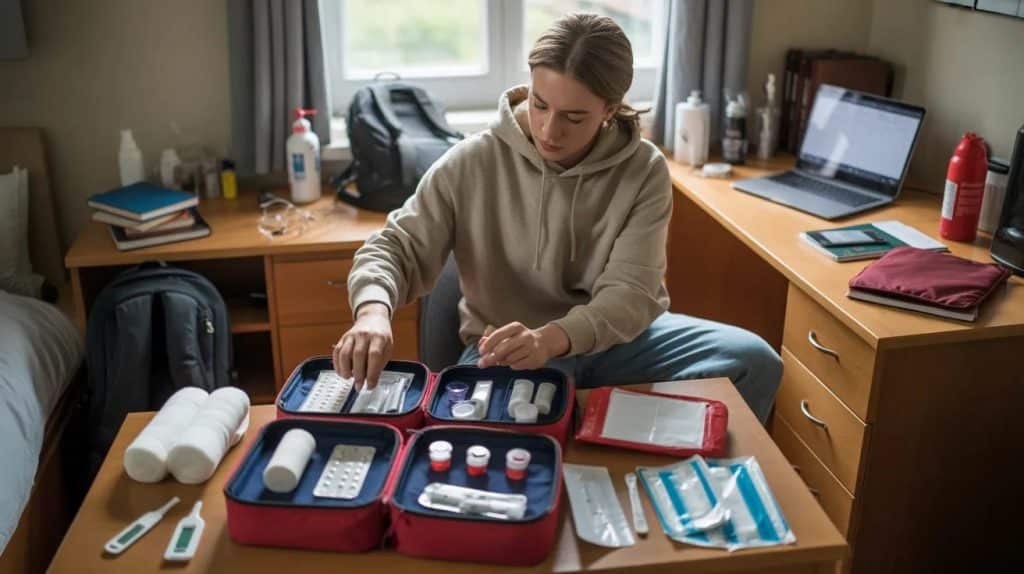
So you’re heading off to college and your mom is probably freaking out about you being on your own for the first time. She’s not totally wrong though – when you get sick at 2am in your dorm room, you cant just yell down the hall for help like at home.
Having a college emergency medication kit ready means you don’t have to drag yourself to CVS when your head is pounding or your throat is killing you. Most college students learn this the hard way after spending their first semester borrowing random pills from roommates or trying to sleep off everything.
Trust me, putting together your own emergency college medicine kit before you move in will save you so much hassle. Here’s exactly what you need to pack so you’re prepared for whatever college throws at you.
1. Pain Relievers – The Most Important Medicine For College
Let’s be real, pain relievers are gonna be your best friends in college. Between stress headaches from studying, body aches from sleeping on those terrible dorm mattresses, and hangovers from… studying too hard, you’ll use these constantly.
Pack both ibuprofen and acetaminophen in your college emergency medication kit. Some people can only take one type, plus they work differently for different kinds of pain. Get the generic store brands – they work exactly the same as Advil or Tylenol but cost way less.
Buy the big bottles too. Those little travel packs run out super fast and cost more per pill. A bottle of 200 tablets sounds like overkill but you’ll go through them faster than you think, especially if your roommates keep borrowing them.
2. Cold and Flu Medicine – Because Dorms Are Germ Factories
Dorms are basically giant petri dishes. When one person gets sick, everyone gets sick because your all sharing the same air, bathrooms, and sometimes drinks at parties. Your college emergency medication kit needs serious cold and flu supplies.
Get a good multi-symptom cold medicine that handles congestion, cough, and body aches all at once. DayQuil and NyQuil are popular for a reason – the day version keeps you functional for class while the night version helps you actually sleep.
Cough drops are clutch when you have to sit through a 3-hour lecture with a sore throat. The mentholated ones work better than the candy-flavored ones. Also grab some decongestant pills for when your sinuses are completely blocked.
3. Allergy Medicine – Not Just For Spring
Even if you’ve never had allergies before, college might change that. New environment, different plants, dorm dust, questionable carpet cleanliness – allergies can hit out of nowhere.
Keep antihistamines like Benadryl or Zyrtec in your emergency college medicine kit. Benadryl works fast but makes you drowsy, so it’s better for nighttime. Zyrtec or Claritin are non-drowsy options for daytime when you need to stay awake in class.
These also work for random allergic reactions to food, bug bites, or that mystery rash you got from doing laundry in the sketchy basement machines. Way cheaper than going to student health services for basic stuff.
4. Stomach Remedies – For Late Night Food Decisions
College dining hall food, 2am pizza runs, questionable leftovers from three days ago – your stomach is gonna hate you sometimes. Medicine to take to college should definitely include stuff for digestive issues.
Antacids like Tums handle heartburn and acid reflux from stress and weird eating schedules. Pepto-Bismol or generic bismuth subsalicylate helps with nausea and upset stomach. Anti-diarrhea medicine is kinda embarrassing to buy but you’ll be glad you have it when you need it.
Don’t forget gas relief pills too. Sharing a small dorm room means you want to handle these situations quickly and quietly. Your roommate will appreciate it.
5. First Aid Supplies – Beyond Just Band-Aids
Your college emergency medication kit needs basic wound care supplies because accidents happen. Paper cuts from textbooks, burns from that hot plate you probably aren’t supposed to have, random scrapes from who knows what.
Stock up on various sizes of bandaids, some sterile gauze pads, and medical tape. Antiseptic wipes or hydrogen peroxide are important for cleaning cuts before covering them. Antibiotic ointment like Neosporin prevents infections.
Add tweezers for splinters, small scissors, and disposable gloves. You never know when you’ll need to help a friend who cut themselves or got something stuck in their finger. Being the person with actual supplies makes you a dorm hero.
6. Thermometer – Know When Its Actually Serious
A digital thermometer is super important for your medicine to bring to college list. When you feel terrible, you need to know if you’ve actually got a fever or if your just tired and stressed.
Most student health centers won’t see you unless you have a fever, so taking your temperature before you drag yourself across campus saves time. Plus it helps you decide if you can push through and go to class or if you legitimately need to stay in bed.
Get a basic digital one that beeps when its done. The fancy ear thermometers are cool but not necessary and the old glass mercury ones are dangerous in a dorm setting.
7. Hydration Helpers – For More Than Just Hangovers
Pedialyte or generic electrolyte drinks are clutch for your college pack. Yeah everyone knows about them for hangovers, but they also help when your sick, after working out, or when you realize you haven’t drunk water in like 12 hours because you were studying.
The powder packets are way better than bottles because they don’t take up much space and you can make them fresh when needed. They last forever in your kit too.
Also keep some of those dissolvable vitamin C tablets. They help boost your immune system and make water taste better so you’ll actually drink enough of it.
8. Sleep Aids – For When Your Roommate Won’t Shut Up
Sometimes you really need to sleep but your roommate is gaming at 3am or people are being loud in the hallway. Sleep aids in your emergency meds kit can be lifesavers during finals week or before big exams.
Melatonin is natural and non-addictive, good for when your sleep schedule gets completely wrecked. Start with low doses like 3mg because more isn’t always better with melatonin.
Benadryl works as a sleep aid too since it makes you drowsy, plus you already have it for allergies. Just don’t take it before morning classes or you’ll sleep through your alarm.
9. Eye Drops and Contact Lens Supplies
If you wear contacts, this stuff is essential medicine for college life. Late night studying, falling asleep in your contacts, dorm air being super dry – your eyes are gonna suffer.
Rewetting drops for contacts help when your eyes feel scratchy and dry. Regular eye drops (the redness relief kind) work for when you look like a zombie from lack of sleep. Saline solution for cleaning contacts is obvious but easy to forget.
Keep a backup contact case and solution in your emergency college medicine kit. Running out of solution at midnight when your contacts feel terrible is the worst.
10. Supplements and Vitamins – Fill The Nutrition Gaps
College dining halls try, but you’re probably not getting all the nutrients you need. A basic multivitamin helps fill those gaps and supports your immune system.
Vitamin D is super important, especially if you’re stuck inside studying or if you go to school somewhere with long winters. Lots of college students are deficient and don’t even know it.
Probiotics help with digestive health, which matters when you’re eating whatever random food is available. Emergen-C packets are good for a quick immune boost when you feel like you’re getting sick.
11. Burn Gel and Instant Cold Packs
Dorm life means cooking with limited equipment in sketchy conditions. Burn gel is an important medicine to bring to college because those hot plates and microwaves can be dangerous when your tired.
Small burns from cooking, curling irons, or that radiator you accidentally touched need proper treatment. Aloe gel works too and feels really soothing.
Instant cold packs are useful for sprains, bumps, sports injuries, or reducing swelling. They activate without needing a freezer, which is perfect for dorms where the communal freezer is always full or broken.
12. Antibiotic Ointment and Hydrocortisone Cream
These two creams handle most skin issues you’ll deal with at college. Antibiotic ointment goes in your college emergency medication kit for cuts, scrapes, and any broken skin to prevent infection.
Hydrocortisone cream is amazing for itchy rashes, bug bites, skin irritation from new laundry detergent, or mystery itchiness that appears randomly. One percent strength works for most situations and you don’t need a prescription.
Both come in small tubes that don’t take up much room but get used surprisingly often. Way better than trying to deal with itchy skin or worrying about infections.
13. Personal Prescriptions Plus Extras
If you take any prescription medications regularly, keep extras in your medical urgent care kit. Not like a huge stockpile, but enough backup for emergencies.
Sometimes pharmacies near campus run out of stuff, or your insurance is being difficult, or you accidentally drop your whole bottle down the sink. Having a weeks worth of backup means you wont miss doses while sorting things out.
This especially matters for important meds like birth control, antidepressants, or anything you take daily. Talk to your doctor before college about getting extra prescriptions for emergencies.
14. Period Supplies and Related Medicine
Even if emergency medications for children dont apply to you, period-related supplies definitely do if your someone who menstruates. Keep backup pads, tampons, or whatever you use in your kit.
Pain relievers specifically for cramps work better than regular ones. Midol or generic versions contain multiple ingredients that target cramps, bloating, and mood stuff all together.
A heating pad or those stick-on heat patches help with cramps too. The adhesive ones are great because you can wear them under clothes and go to class instead of being stuck in bed.
15. Emergency Contact Info and Insurance Cards
The last thing for your college emergency medication kit isnt medicine but its just as important. Keep copies of your insurance card, emergency contact numbers, and any important medical info.
Write down allergies to medications, chronic conditions, or anything doctors would need to know. Include your parents numbers, your primary doctor back home, and the campus health center number.
If something serious happens and you cant communicate, having this info accessible could be really important. Plus when you need to make appointments you wont have to call home asking for insurance information.
How To Actually Organize Your College Pack
Get a plastic storage bin or a tackle box to keep everything together. Those cloth first aid kits fall apart and dont hold enough stuff for a whole semester.
Label everything clearly and maybe make a list of contents on the inside lid. When your sick and feeling terrible, you dont want to dig through a messy pile searching for specific medicine.
Keep your urgent care kit somewhere accessible but not where it could get knocked over or spilled. Under your bed or on a closet shelf works good. Make sure your roommate knows where it is too in case you need help getting to it.
Maintaining Your Kit Throughout College
Check your college emergency medication kit at the start of each semester. Throw out expired medicine, replace anything you used up, and restock based on what you actually needed last term.
After you get sick or deal with an injury, immediately replace whatever you used. Don’t wait until the next time you need it and realize it’s gone.
Keep receipts from buying medicine – sometimes you can submit them to your parents insurance for reimbursement. Even if you can’t, tracking what you spend helps budget for next semester’s supplies.
What Not To Include
Don’t go overboard stockpiling prescription medications you don’t actually need. Sharing prescription meds with friends is illegal and dangerous, even if they’re asking for help.
Skip the really specialized stuff unless you know you need it. You don’t need a full surgical kit or medications for super rare conditions. Stick to common problems college students actually face.
Also don’t pack liquids that could leak and ruin everything else. Pills and individually wrapped items are way better for long-term storage in a dorm room.
When Your Kit Isn’t Enough
Your emergency meds kit handles common stuff, but knows when you need actual medical help. High fever that won’t go down, severe pain, trouble breathing, signs of serious infection – get to student health services or urgent care.
Most colleges have health centers with basic care included in tuition. Use them! That’s what they’re there for. Your kit is for handling small stuff and getting through until you can see a doctor if needed.
Keep the campus health center number saved in your phone. Also know where the nearest urgent care or hospital is, just in case something happens on a weekend when student health is closed.
Final Thoughts
Putting together a college emergency medication kit might seem like overkill when you’re packing for school, but you’ll use it way more than you think. Being sick away from home for the first time is rough, and having supplies ready makes it so much easier.
You don’t need to buy everything at once. Start with the basics and add stuff as you figure out what you actually need. Ask friends what they use or wish they had in their kits.
The independence of college is awesome, but it also means taking care of yourself when things go wrong. A well-stocked medicine kit is part of being a responsible adult, even if that sounds boring. Your future sick self will definitely thank you for being prepared.
Frequently Asked Questions
Q1: How much does it cost to put together a college emergency medication kit?
You can build a solid college emergency medication kit for around $50-75 if you shop smart. Buy generic brands instead of name brands – they have the same active ingredients but cost way less. Check dollar stores for basic supplies like bandaids and gloves. Stock up during back-to-school sales in August when stores have deals on medicine and first aid stuff. You don’t need to buy everything at once either – start with essentials and add more items throughout your first semester as you figure out what you actually use.
Q2: Can I bring prescription medications to college in my dorm?
Yes, you can totally bring prescription medications to college. Just keep them in their original labeled bottles with your name on them. Store them somewhere secure like a locked drawer if possible, especially if you have roommates you don’t know well. Never share prescription meds with friends even if they ask – it’s illegal and dangerous. If you take daily medications, set phone reminders so you don’t forget doses with your new crazy college schedule. Also register any serious medical conditions with student health services in case of emergencies.
Q3: What if my roommate keeps using my emergency college medicine kit without asking?
Ugh, this is annoying but happens a lot in dorms. Have an honest conversation about boundaries – explain you don’t mind helping occasionally but they need to ask first and replace what they use. You could keep a small shared kit with basic stuff like pain relievers and bandaids that both of you contribute to, then keep your personal emergency meds kit separate. If they keep taking stuff without permission, move your kit somewhere they can’t access it. You paid for those supplies and shouldn’t have to keep replacing them because someone else is mooching.
Q4: Do I really need both types of pain relievers or can I just bring one?
You should definitely bring both ibuprofen and acetaminophen even though it seems redundant. They work differently – ibuprofen is better for inflammation like muscle aches and menstrual cramps, while acetaminophen is better for headaches and fevers. Some people can’t take ibuprofen because of stomach issues, and acetaminophen is safer to take with alcohol in your system (not that you’re drinking underage or anything). Plus you can alternate between them for really bad pain or fever. Having both options in your medicine for college supplies means you’re covered no matter what type of pain or who needs help.
Q5: Should I include emergency medications for children in my college kit even though I’m not a kid?
Unless you’re bringing your kid to college with you (which would be super weird), you don’t need emergency medications for children specifically. That keyword is kinda random for a college kit. However, if you babysit or nanny as a job near campus, having children’s medicine in appropriate doses could be useful. Otherwise stick to adult formulations for your college emergency medication kit. Focus on what you and your college-age friends will actually need – stuff for hangovers, stress headaches, and surviving on ramen is way more relevant than children’s Tylenol.